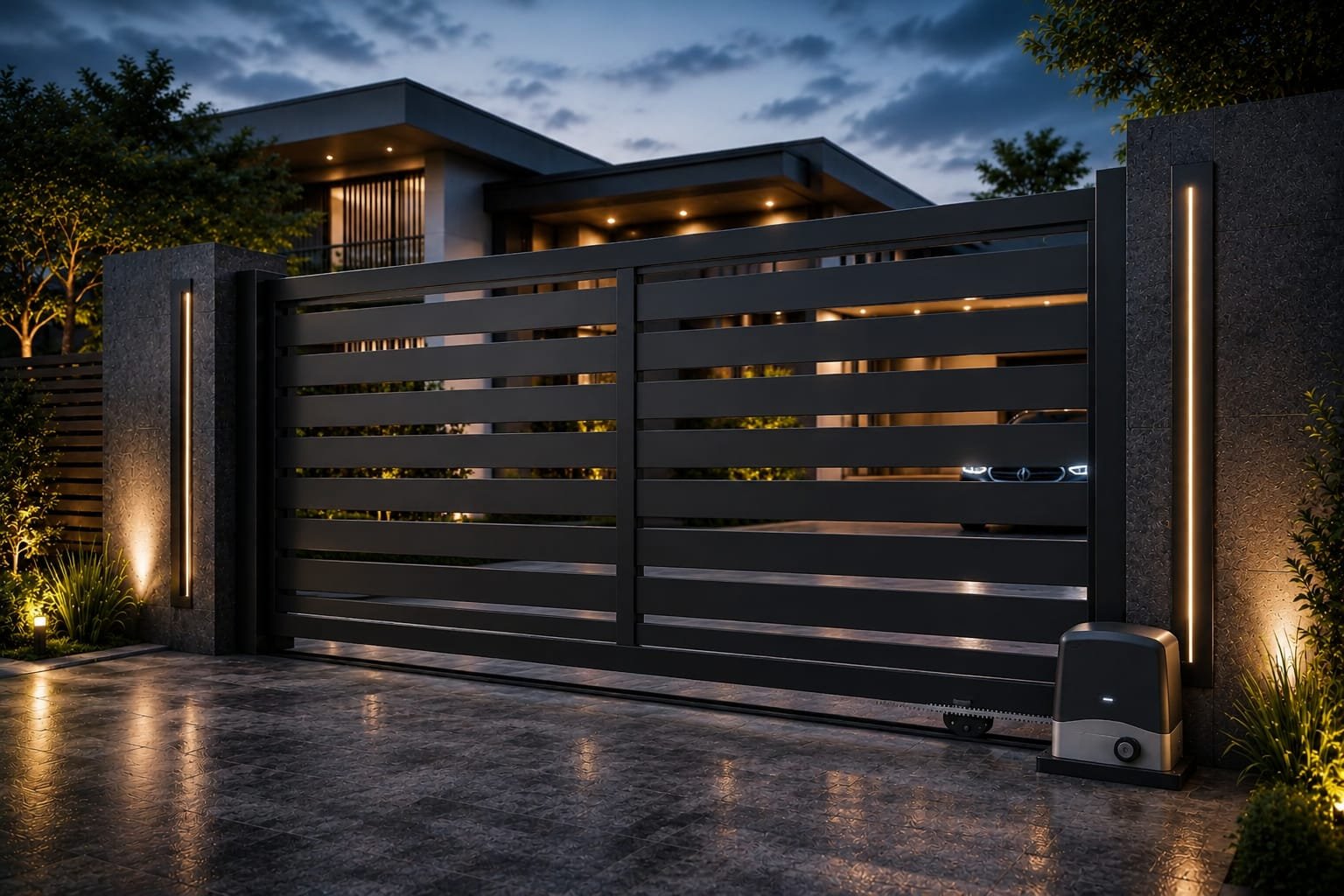
Gate automation is usually the very first thing homeowners install — it's the entry point everyone uses, multiple times a day, and it's the easiest upgrade to feel the benefit of immediately. But "automate my gate" isn't a single product; the right system depends heavily on your gate type and driveway layout.
The three common gate automation types
Swing gate automation
If your gate is hinged and opens like a door — inward or outward — swing automation is the fit. Motors mount on the gate posts and push or pull each leaf open.
Best for: homes with enough space in front of or behind the gate for it to swing freely, and gates that are already hinged.
Sliding gate automation
The gate slides sideways along a track instead of swinging. This is the most common choice for narrower driveways or gates that open directly onto a road, where a swinging gate would obstruct traffic or a footpath.
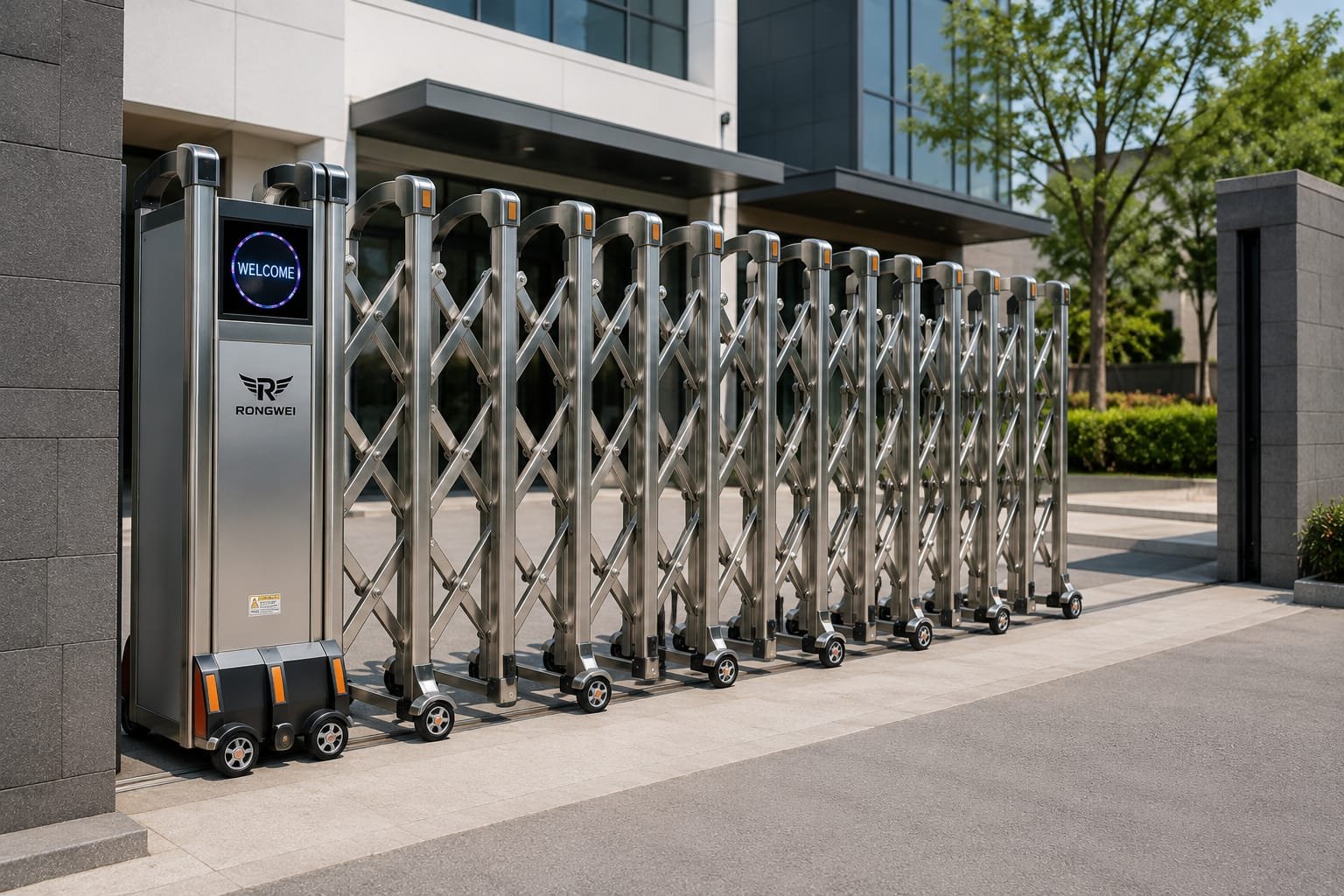
Best for: properties where there's no room for a gate to swing outward, or where the driveway slopes and a swing gate would drag.
Boom barrier automation
A boom barrier — a single arm that lifts to let vehicles through — is less common for individual homes but is the standard choice for gated communities, apartment complexes, offices, and parking areas where many vehicles pass through daily.
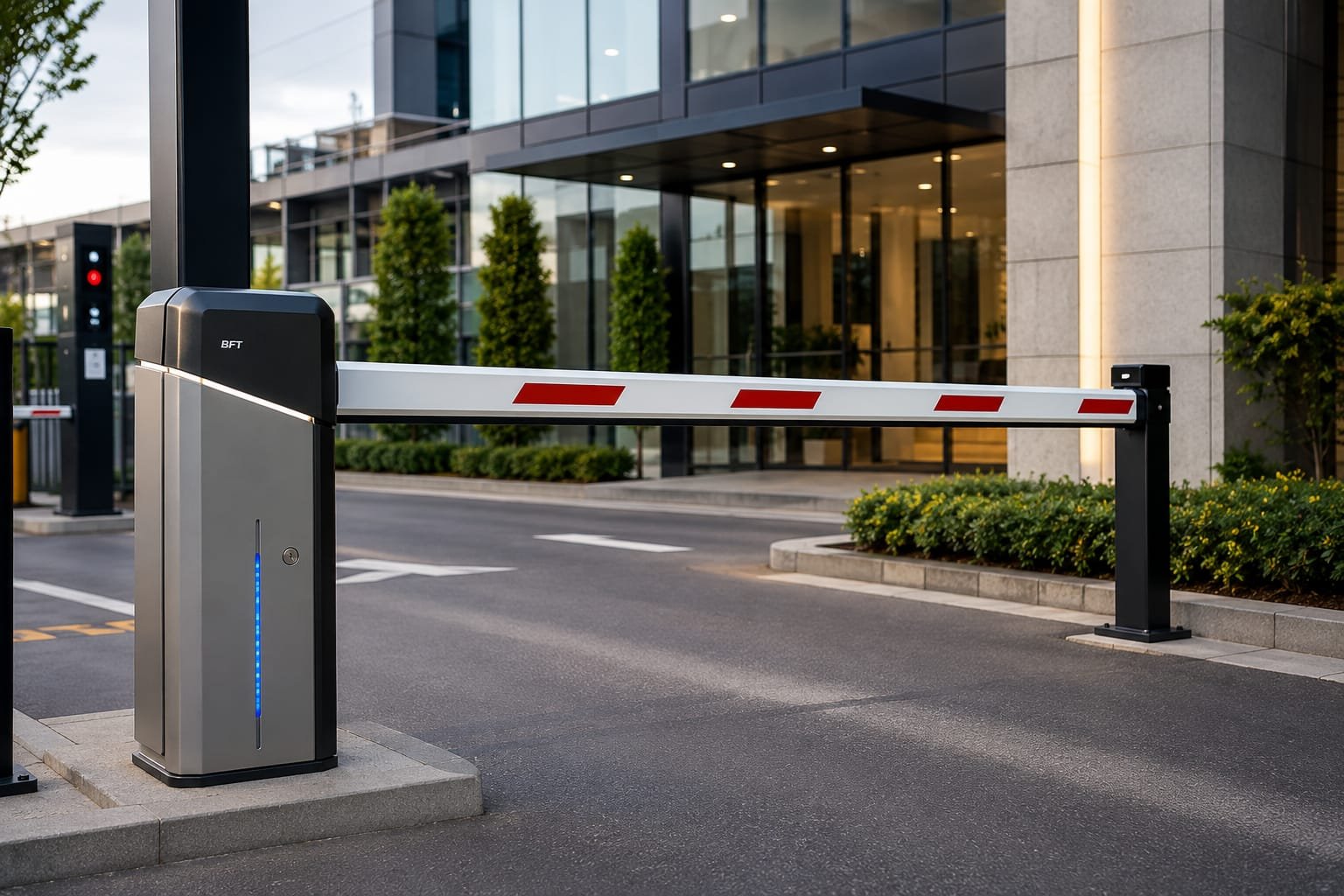
Best for: shared entrances, commercial parking, and any location prioritising fast, high-frequency vehicle movement over a fully sealed gate.
Questions to answer before you choose
- How much space is there in front of and behind the gate? This alone rules out swing or sliding in many cases.
- How heavy is the existing gate? Heavier gates (solid metal, stone-clad) need higher-torque motors — this affects motor selection, not just gate type.
- Is the driveway flat, or does it slope? A sloped driveway can make sliding automation impractical without additional track work.
- How many people use the gate daily, and how? A family home with two cars has very different needs from a gated community with dozens of daily vehicle movements.
- Do you want remote/app control, or just a wall switch and remote? Both are possible, but it affects what hardware gets installed at the panel.
Power backup matters more than people expect
A gate that stops working during a power cut is one of the most common complaints we hear about automation done elsewhere. Any proper gate automation installation should include a battery backup that keeps the motor working for a reasonable number of cycles during an outage — this is worth confirming explicitly before installation, not after.
Retrofit vs new installation
If you already have a manual gate you like, it usually doesn't need to be replaced — retrofit automation kits can be fitted to most existing swing and sliding gates. This is often the more cost-effective route, and it's what we recommend checking first before assuming a full gate replacement is needed.
Getting it right the first time
Gate automation is one of those installations where a wrong choice is expensive to undo — the motor, track, and control wiring are all specific to the gate type. A short site visit before you buy anything settles this quickly and avoids that risk entirely. If you're deciding between swing, sliding, or boom barrier automation, we're happy to assess your gate and driveway and recommend the right fit.