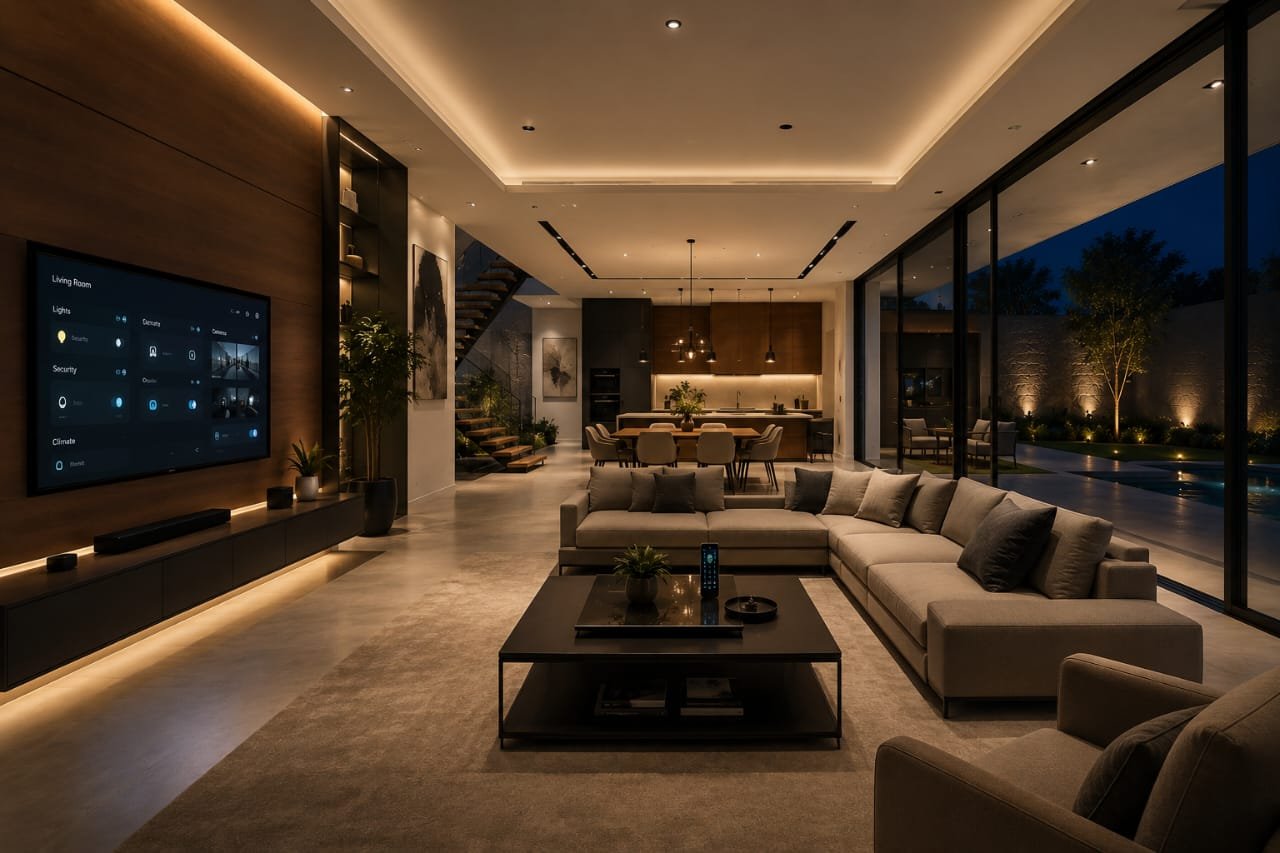
Smart home automation used to feel like something reserved for tech showrooms and luxury villas. That's changed. Today, homeowners across Chennai, Salem, and the rest of Tamil Nadu are automating everything from gates to gyser and geyser switches — not as a novelty, but because it genuinely makes daily life easier and homes safer.
If you're planning your first automation project, here's how to think about it properly instead of buying gadgets one at a time.
Start with a problem, not a product
The homeowners who end up happiest with their automation setup are the ones who started with a specific frustration — not a shopping list. Common starting points we hear from clients:
- "I don't want to get up to check who's at the gate every time the bell rings."
- "I forget to lock the door when I'm in a hurry."
- "I want the living room lights to turn on automatically when it gets dark."
- "I travel often and want to see what's happening at home."
Once you know the problem, the right combination of automation becomes obvious.
Building the system in layers
Rather than automating the whole house at once, most successful projects are built in three layers:
1. Entry and security
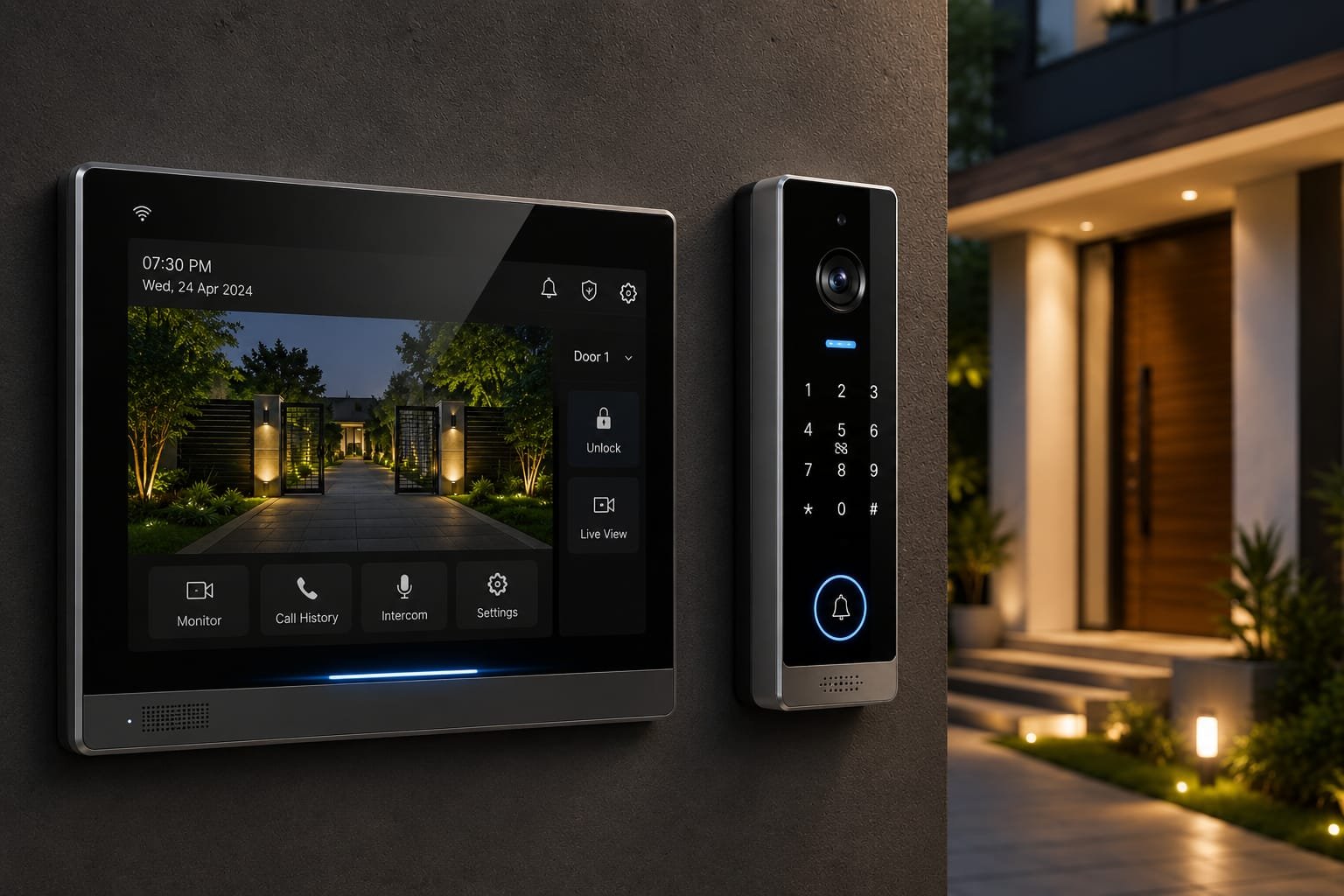
This is almost always the starting point — gate automation, a video door phone, CCTV coverage at entry points, and a digital or biometric door lock. It solves the most common daily frustrations (who's at the gate, is the door locked) and gives you the biggest immediate sense of security.
2. Comfort and convenience
Once entry and security are handled, most homeowners move to lighting automation, curtain automation, and AC automation — the systems you interact with dozens of times a day. A well-designed "scene" (like a single "Movie Mode" button that dims lights and closes curtains) is often the feature people love most, months after installation.
3. Monitoring and control
The final layer is remote access — being able to check your cameras, unlock a door for a guest, or turn off a light you forgot, from anywhere, through a single app. This layer only makes sense once the first two are in place; it's the payoff, not the starting point.
What actually matters when choosing a system
A few practical things worth checking before you commit to any home automation provider:
- Wiring compatibility — can the system work with your existing electrical wiring, or does it require breaking walls?
- App reliability — does the control app work smoothly on a normal home Wi-Fi connection, including during a power cut and reconnect?
- Local support — if a sensor or panel needs servicing two years from now, is there a local team who can actually come out?
- Room for expansion — can you add curtain automation next year without replacing what you installed today?
A realistic starting budget
You don't need to automate every room to see real benefits. A gate automation unit with a video door phone, plus a digital door lock on the main entrance, is a common and very effective starting package — it directly addresses the two biggest daily pain points (who's outside, is it locked) before you spend on anything else.
Our approach
At Sensor Home Automation, every project starts with a free home visit — not a sales pitch. We look at your entry points, wiring, and daily routine, and recommend what will genuinely make a difference, in the order that makes sense for your home. If you're just starting to explore automation, that free consultation is the best first step.